


Bitcoin briefly touched $62,000 on November 15, wiping out its gains since August. Prices subsequently recovered above $64,500, but the rebound left BTC below key long-term technical levels as institutional withdrawals and selling by large holders continued.
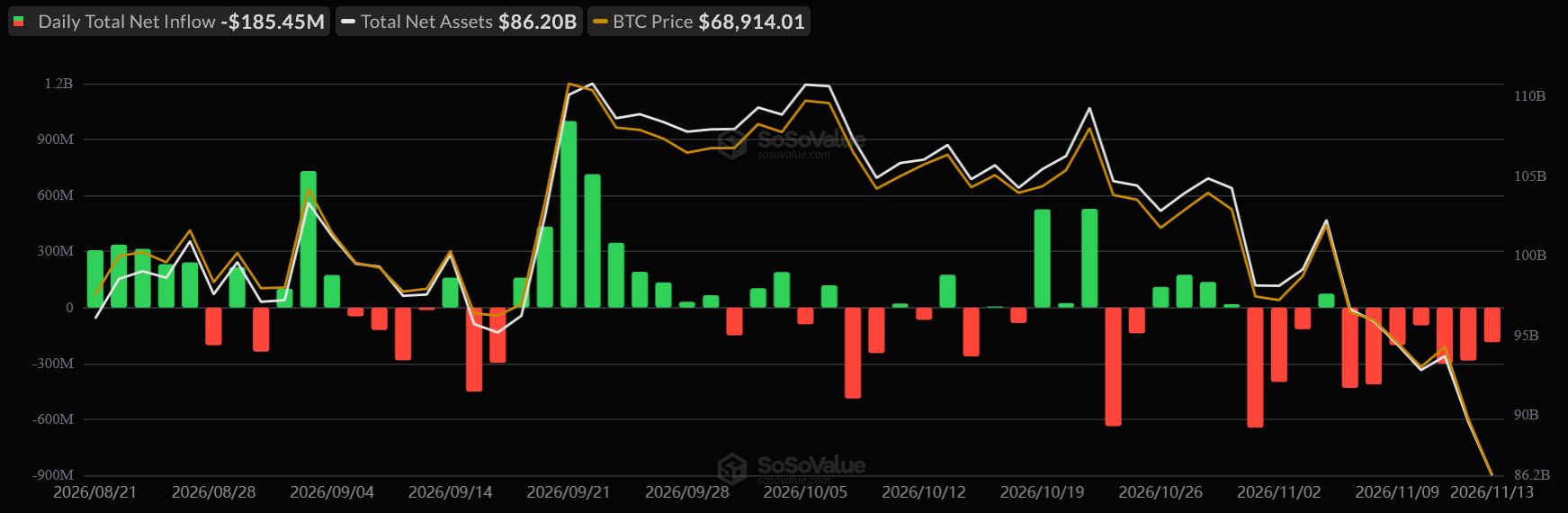
The decline came after a difficult fortnight for US spot Bitcoin exchange-traded funds. According to Farside Investors, the products lost approximately $2.35 billion during the first two full trading weeks of November. BlackRock’s iShares Bitcoin Trust (IBIT) recorded 11 consecutive sessions of net withdrawals through November 13.
Friday’s outflows totalled $185.4 million across US spot Bitcoin ETFs, with IBIT accounting for $143.5 million. The withdrawals have reduced a source of demand that previously helped absorb Bitcoin entering the market.
Large Bitcoin Holders Send More Coins to Exchanges
Selling pressure has extended beyond institutional funds. According to Glassnode, Bitcoin whales, defined as entities holding at least 1,000 BTC, recorded average net exchange deposits of approximately $55,000,000 per day as of November 15, 2026.
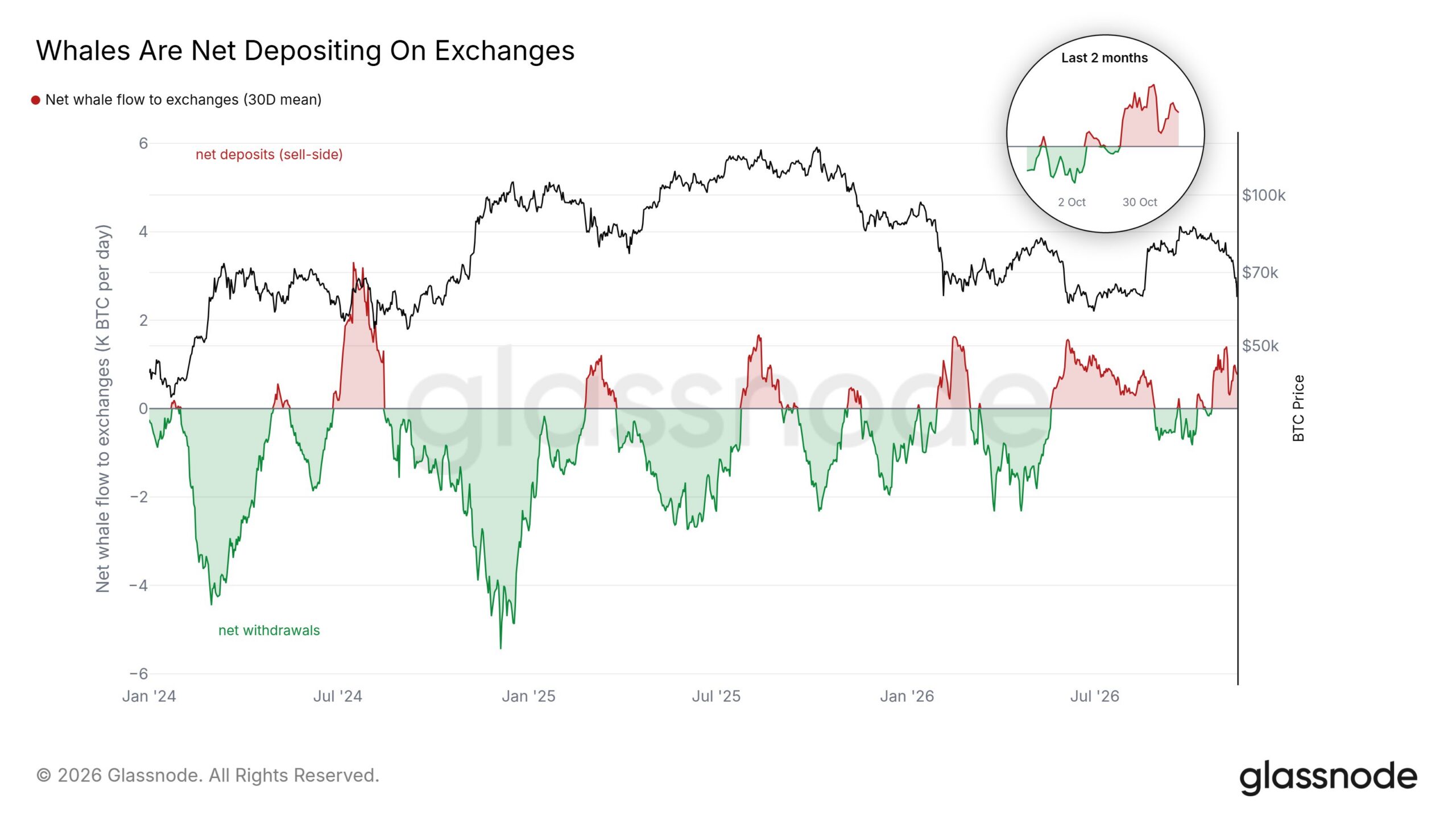
Based on the 30-day moving average, this represents an implied net inflow of roughly $1.65 billion over that period. The positive net flow means deposits exceeded withdrawals, although the transfers do not necessarily represent completed Bitcoin sales. They indicate that additional BTC has moved onto trading platforms, where it becomes available for potential selling.
The derivatives market has also seen substantial forced position closures. On November 13, Ravel reported that a trader on Hyperliquid had a $25.15 million leveraged Bitcoin position liquidated. The same wallet subsequently opened another large long position, which was also reportedly liquidated.
Separately, market analyst Dom reported $172.1 million in net aggressive selling on Coinbase’s BTC/USD spot market on November 14. He described the figure as the largest Saturday selling imbalance across the 472 Saturdays examined.
These figures capture different forms of market activity, but together they illustrate how institutional redemptions, spot selling and leveraged liquidations have coincided during Bitcoin’s recent decline.
The $68,000 Price Zone Comes Into Focus Before Fed Minutes
Bitcoin’s technical position has become more difficult following the weekend sell-off.
Analyst Daan Crypto Trades placed the 200-week simple moving average near $67,960 and the corresponding exponential moving average around $69,910 on November 15. Bitcoin was trading below both indicators.
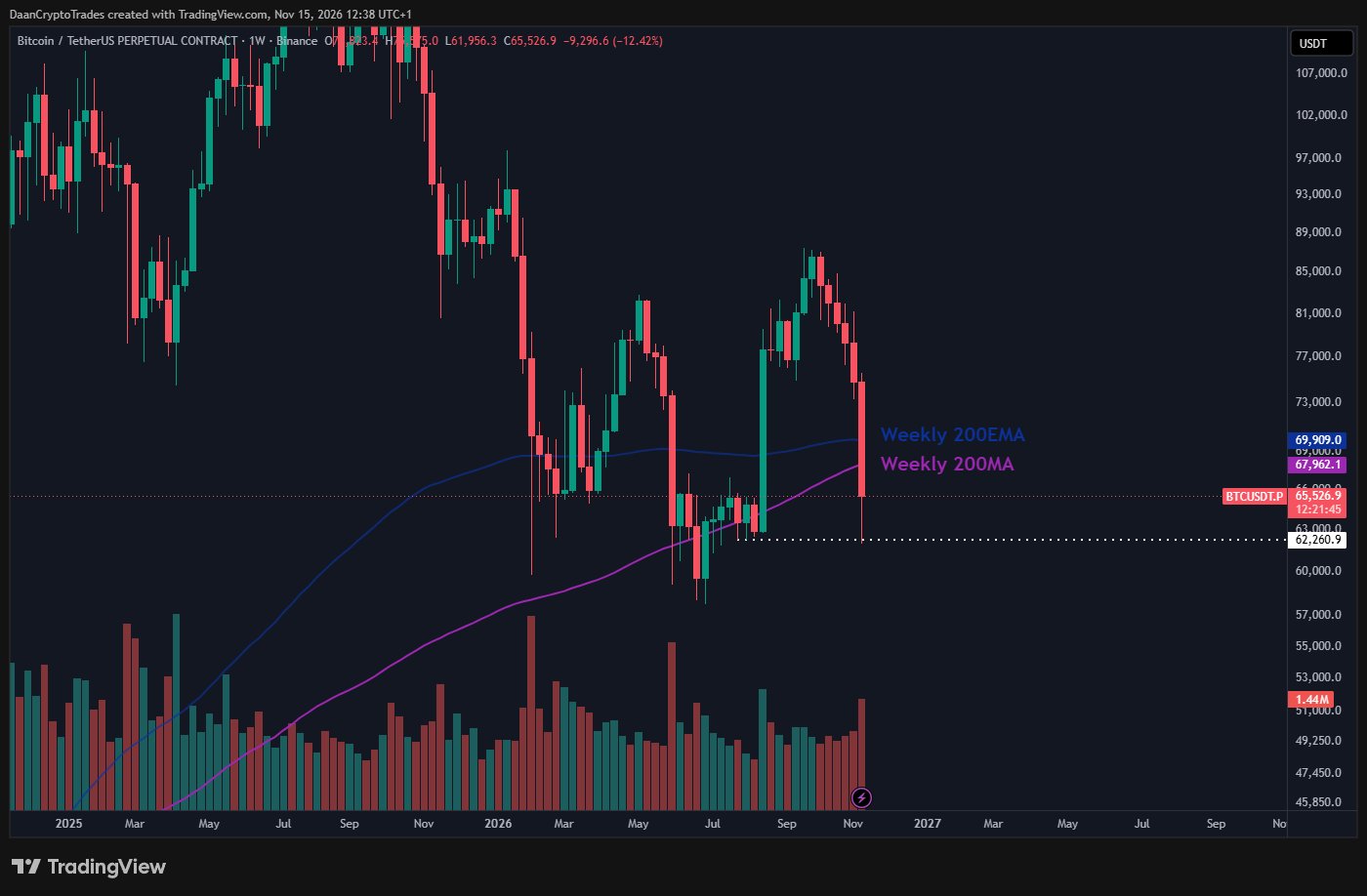
For traders using these averages, the question is whether Bitcoin can reclaim the area around $68,000 and establish support there. A temporary move above it would carry less significance than sustained trading at higher prices.
Crypto analyst Michaël van de Poppe has outlined a possible recovery toward $70,100 to $72,130, with an initial resistance level around $67,440. His analysis allows for a rebound without assuming that the recent decline has established a lasting bottom.
Meanwhile, macroeconomic developments could affect broader risk appetite this week.
Nvidia is scheduled to release its fiscal third-quarter results on November 17, with its earnings conference call due after the US market closes. The company’s results will provide another reference point for investor sentiment toward technology and artificial intelligence-related stocks.
The Federal Reserve follows on November 18 with minutes from its October policy meeting.
At that meeting, the central bank maintained its benchmark interest rate at 3.75% to 4%. Two policymakers dissented, favouring a quarter-point increase.
The Fed’s accompanying statement acknowledged the economic uncertainty facing policymakers:
“Economic activity is expanding at a strong pace. While uncertainty remains elevated owing, in part, to geopolitical developments, domestic spending has been resilient.”
Wednesday’s minutes may provide further detail on inflation concerns and the disagreement over interest rates ahead of the Fed’s December meeting.