


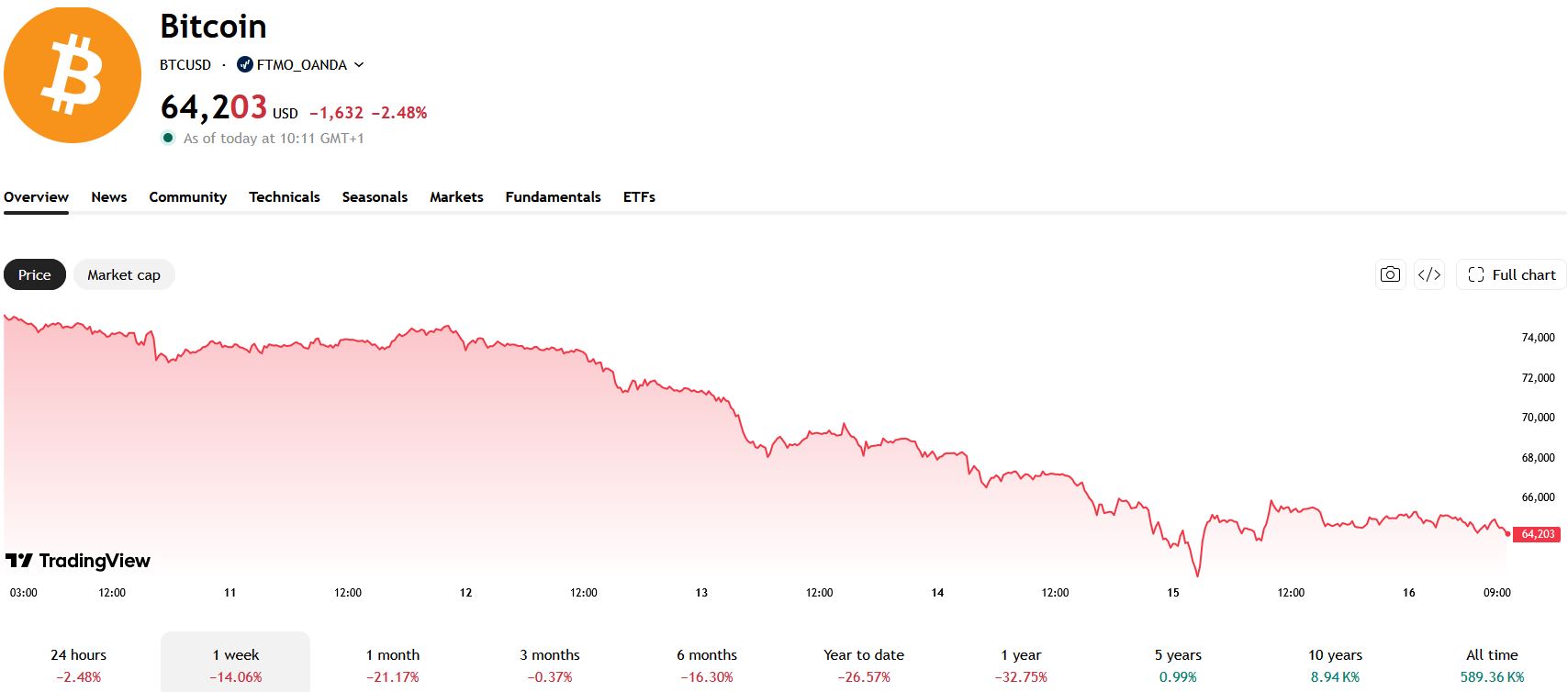
Bitcoin has shed $25,000 in just three weeks, dropping from $87,000 to a low of $62,000 as rising US interest-rate expectations and sustained institutional withdrawals put cryptocurrency markets under pressure.
The largest cryptocurrency was trading around $64,500 on November 16, leaving it 14% lower over the past seven days. The decline has also pushed Bitcoin below its 200-day moving average, a closely watched technical indicator.
Bitcoin ETF Withdrawals Accelerate as Leveraged Traders Face Heavy Losses
Institutional investors have been reducing their exposure to Bitcoin.
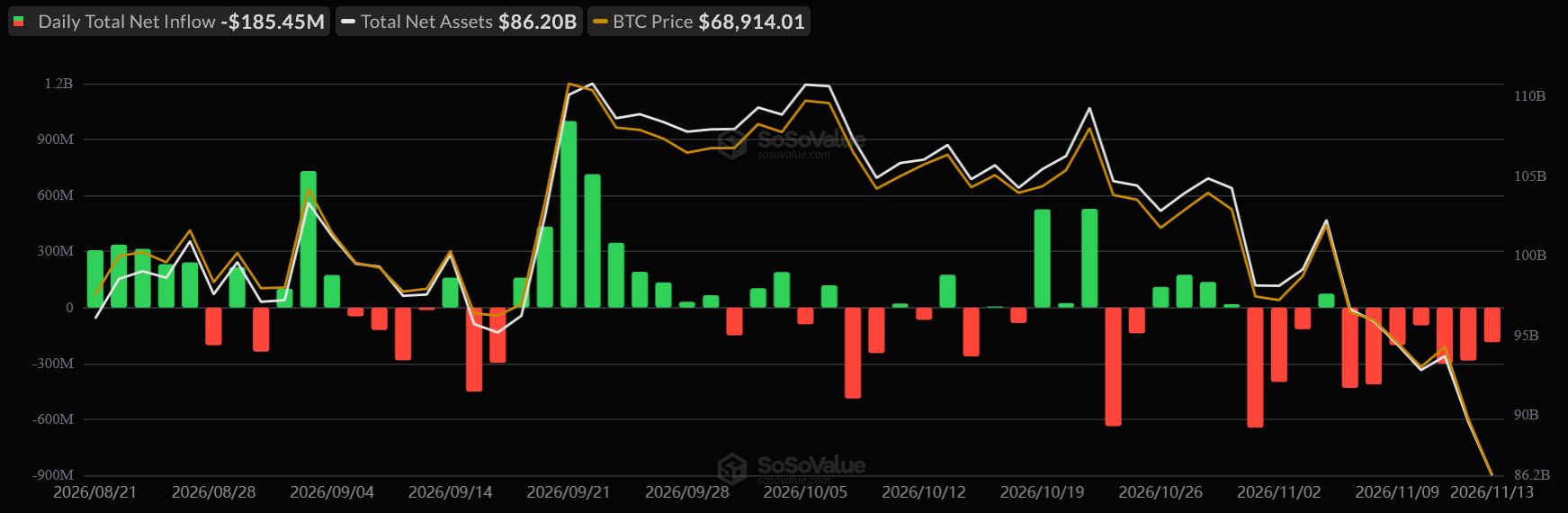
US spot Bitcoin exchange-traded funds registered seven consecutive trading sessions of net withdrawals between November 5 and 13, with combined outflows reaching $1.91 billion, according to Farside Investors.
Friday alone saw $185.4 million leave the funds. BlackRock’s IBIT accounted for $143.5 million of those withdrawals, while Fidelity’s FBTC recorded another $41.9 million.
The derivatives market added to the pressure.
On November 13, more than $1.64 billion in leveraged cryptocurrency positions were liquidated within 24 hours, according to CoinGlass. Long positions represented 89% of the total, with Bitcoin accounting for approximately $916 million.
The volatility also affected large individual traders. RavelAlpha reported that a Hyperliquid trader suffered liquidation of a Bitcoin position worth roughly $25.2 million before opening another leveraged trade.
On-chain figures suggest that buyers have yet to return in sufficient numbers.
According to CryptoQuant, apparent Bitcoin demand declined by approximately 284,000 BTC over 30 days. Tether’s market capitalization contracted by $6.6 billion over 60 days, suggesting less stablecoin liquidity was available across cryptocurrency markets.
CryptoQuant analyst XWIN described the situation:
“Deleveraging is progressing well, but spot demand has not recovered sustainably. A lasting recovery requires new buyers.”
US Bond Yields Rise While Several Altcoins Defy the Wider Sell-off
Pressure is also coming from traditional financial markets.
US consumer prices increased 0.4% in October, while core inflation rose 0.3%, according to the Bureau of Labor Statistics. Both readings exceeded expectations, strengthening concerns over another Federal Reserve interest-rate increase in December.
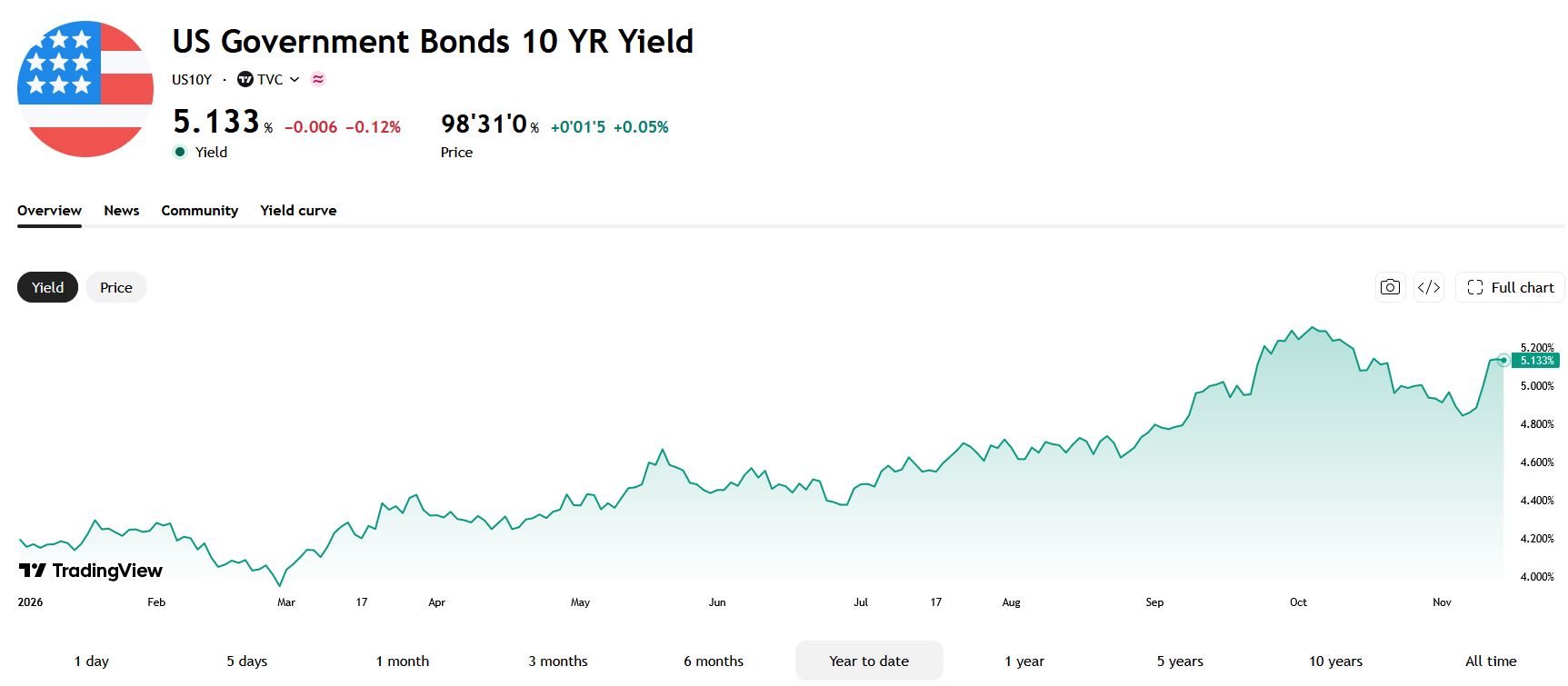
The yield on 10-year US Treasury bonds climbed from 4.86% on November 6 to 5.10% on November 12. Meanwhile, the US dollar index reached 103.4, its highest level since April 2025.
Geopolitical risks have added to market uncertainty following renewed tensions involving Iran, Bahrain and US military forces. Brent crude traded around $93.15 per barrel, although the International Energy Agency continued to anticipate a fourth-quarter oil supply surplus.
Despite Bitcoin’s decline, several altcoins managed to post gains.
Falcon Finance rose 10% to $0.10 over 24 hours, while Quant advanced 5.64% to $154.71. Uniswap gained 2.60% to $5.15, and VeChain increased 2.38% to $0.0048.
Cardano also climbed 1.60% to $0.15 despite disagreements between founder Charles Hoskinson and ADA holders. Worldcoin added 1.50% to $0.26, while Hyperliquid rose 1.42% to $66.26.
Meanwhile, Bitcoin miners continue to face pressure to finance operations. Mining companies transferred 2,077 BTC to exchanges over the past week, although those movements do not necessarily represent completed sales.
Figures covering eleven publicly listed mining companies showed more than 100,000 BTC in combined sales and wallet outflows during 2026. MARA Holdings accounted for 40,581 BTC, followed by Riot Platforms with 20,264 BTC.