
Solana spotlighted DTCC’s $4.7 quadrillion figure, but wallet rules reveal a narrower path for tokenized securities.
Solana had a rather spectacular number to share with its followers: $4.7 quadrillion.
That figure took center stage in a November 12 X post highlighting the Depository Trust & Clearing Corporation’s (DTCC) plans to bring tokenized securities to Solana.
It’s the kind of number that makes even a trillion-dollar crypto market look small.
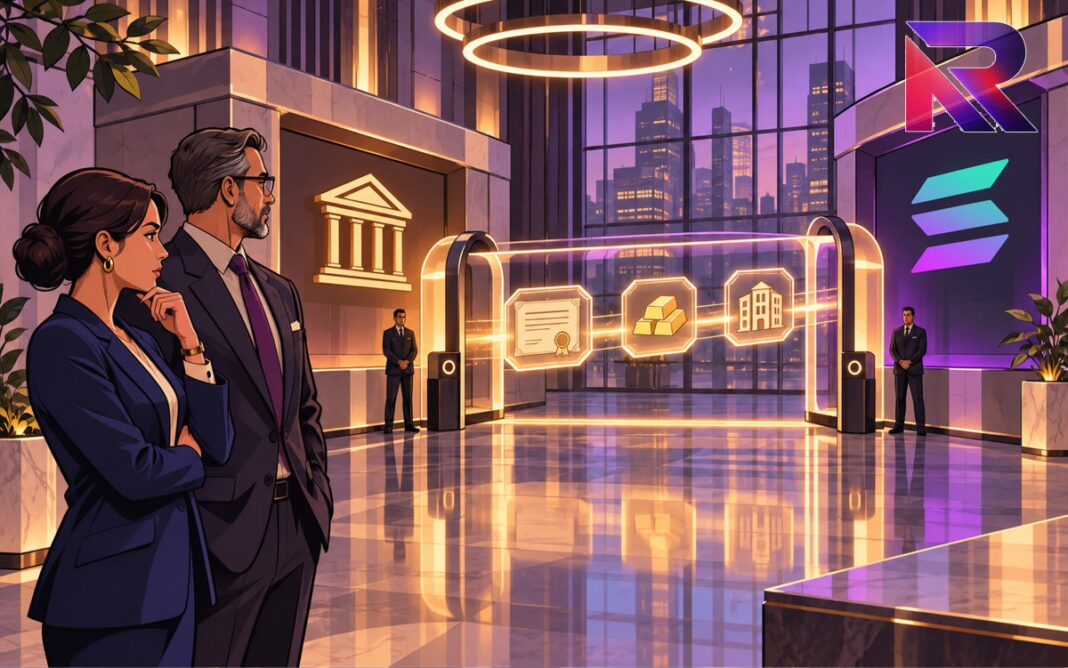
But DTCC’s own announcement on X, published more than eight hours earlier, had a different emphasis. The financial infrastructure giant was expanding its blockchain options, with Solana integration targeted for the second half of 2027.
That distinction matters. The announcement isn’t about trillions of dollars suddenly moving onto Solana. It’s about adding another blockchain to a regulated tokenization service.
And the more interesting question is who will actually be allowed to move those securities once they arrive.
The $4.7 Quadrillion Number Has a Catch
The number is real. Its relationship to Solana is considerably less dramatic.
According to DTCC’s November 12 press release, its subsidiaries processed $4.7 quadrillion worth of securities transactions in 2025.
That’s historical annual transaction activity across DTCC’s businesses, not a pool of assets waiting to be tokenized.
The same release mentions another enormous figure: $114 trillion in securities under custody and asset servicing at its depository subsidiary.
These numbers measure different things. Neither represents securities committed to Solana, and neither provides a reasonable basis for estimating future on-chain capital flows.
There’s another important detail.
DTCC’s Tokenization Service already launched on October 28, initially connecting to Canton Network and DTCC’s private Besu network.
At launch, 20 DTC participants had signed agreements to access the service, including major financial institutions such as JPMorgan, Morgan Stanley, and UBS.
The eligible asset framework includes Russell 1000 equities, major-index ETFs, and U.S. Treasuries.
But those are service-wide categories and participation figures. DTCC hasn’t disclosed which securities will reach Solana first, how many institutions will use that particular connection, or how much value might follow.
A Public Blockchain With a Registered-Wallet Rule
Here’s where the story becomes more interesting than the headline number.
The December 2025 SEC staff no-action letter and attached DTC request describe how the tokenization system is designed to work.
Under that documented model, a DTC participant first registers a wallet on an approved blockchain. The participant can then instruct DTC to convert an eligible securities entitlement from its traditional book-entry form into a tokenized entitlement.
DTC records the corresponding securities in a digital omnibus account and issues tokens representing that entitlement to the registered wallet.
Once tokenized, those entitlements can move directly between registered wallets without requiring a separate DTC transfer instruction each time.
But they cannot simply be sent to any blockchain address.
Only DTC participants can register wallets. Participating firms may register wallets for their customers and even provide those customers with private keys.
However, customer access depends on the arrangements between the firm and its clients. DTC continues to recognize the participating firm as the entitlement holder and holds it responsible for wallet activity.
There’s also a control mechanism that might surprise anyone expecting unrestricted crypto-style ownership.
The documented system gives DTC a root wallet capability to transfer, mint, burn, or convert tokens when specified circumstances require intervention, such as correcting erroneous transfers or replacing lost tokens.
In other words, running these securities on a public blockchain doesn’t remove the institutional controls governing their movement.
And that is consistent with DTCC’s stated objective: preserving traditional securities protections while adding blockchain functionality.
The Real Test Comes in 2027
Solana’s official announcement emphasizes faster settlement and round-the-clock asset movement.
DTCC’s Tokenization Hub also outlines the service’s registered-wallet framework and potential for continuous transfers.
But being able to transfer a tokenized security around the clock doesn’t automatically create a 24/7 stock market.
Trading venues, available liquidity, and customer eligibility remain separate questions.
Ravel previously examined a Canton tokenized-stock proposal facing trading restrictions. That initiative differs from DTCC’s service, but it illustrates why blockchain availability and securities-market access shouldn’t be confused.
The same distinction applies to the broader institutional adoption narrative. As Ravel explored in its investigation into Wall Street’s involvement with Arc, connecting financial institutions to blockchain infrastructure isn’t the same as demonstrating substantial on-chain activity.
For Solana, DTCC’s planned integration is a meaningful infrastructure development. It could expand the network’s role in regulated securities tokenization.
But there is no disclosed Solana-specific asset balance, transfer volume, or revenue projection to measure that opportunity today.
When the integration arrives in the second half of 2027, three questions will matter: which securities become available, who can actually move them, and how much activity takes place on Solana.
Until then, $4.7 quadrillion tells us how large DTCC’s existing business is.
It tells us almost nothing about how large its Solana business will become.